psychology Counselling Therapy
Understand yourself.
Heal what hurts.
Move forward.
Antara Therapy is a psychological counselling practice for adults, couples, parents, teenagers and children, and for emotional adjustment in later life. Sessions are private, unhurried, and shaped around what you're actually dealing with — not a script. You don't have to arrive with the right words.
Online & in-person[50/60] minute sessionsConfidential

“You can ask for help without having everything figured out.”
-
Confidential & respectful
What you share stays between us, within professional limits.
-
Personalised support
The approach is built around your situation, pace and goals.
-
Evidence-informed methods
Drawing on CBT, DBT and trauma-informed practice where they fit.
-
A non-judgmental space
No pressure to perform, explain yourself, or be further along than you are.
You're not alone in this
Sometimes the hardest part isn't knowing something is wrong.
It's knowing what to do next.
People come to therapy at very different points. Some arrive in the middle of a crisis. Many arrive because something has been quietly wearing them down for months and they've run out of ways to explain it to the people around them.
You might recognise some of this:
- Overwhelmed
- Stuck
- Disconnected
- Anxious
- Emotionally exhausted
- Confused
- Unable to move forward
Therapy isn't about being told what's wrong with you. It's a space to slow down and look at what's happening — to understand the patterns underneath it, learn ways of coping that actually hold up, and build something steadier from there. It's collaborative work, and it moves at your pace.
See how the process works
Services
Support shaped around what you're carrying
Eight of the areas people most often reach out about. If you're not sure which one fits, a consultation is a good place to start.
Trauma Healing
A compassionate space to understand difficult experiences, develop coping tools, and work toward greater emotional safety.
Anxiety/ Depression/ OCD/ Phobias Support
Practical, structured work on the thoughts, habits and physical patterns that keep low mood and worry running.
Couple Counselling
For partners caught in the same argument on repeat, or drifting quietly apart. Both people get heard.
Children Counselling
Age-appropriate, play- and conversation-based support for younger children, with parents kept in the loop.
Teen Counselling
A space that belongs to them — academic pressure, friendships, identity, family strain, self-worth.
Family Therapy
Working with the relationships in a household rather than singling out one person as the problem.
Parent Counselling
Support for the parent, not just the child — behaviour that baffles you, communication that's gone quiet.
Life Counselling
Direction, decisions and burnout. For students and professionals working out what comes next.
Oncology/ Chronic Illness Counselling
Patients dealing with chronic illnesses like cancers/ tumors help them in acceptance and learning to heal.
All 40+ services, grouped by category.
Therapeutic approach
Methods chosen to fit you, explained in plain language
No single method suits everyone. These are the frameworks that inform the work here — usually blended, always adapted. Open any one to see what it actually looks like in a session.
Cognitive Behavioural Therapy CBT
Thoughts, feelings and behaviour feed each other. CBT makes that loop visible, then works on it deliberately — noticing the automatic thought, testing whether it holds up, and trying a different response. Structured, practical, and often useful for anxiety, low mood and self-critical thinking.
Dialectical Behaviour Therapy DBT
Built for emotions that arrive fast and hard. DBT teaches concrete skills in four areas: riding out distress without making things worse, regulating emotion, staying present, and holding your ground in relationships. Skills get practised between sessions, not just discussed.
Trauma-informed support
Safety and pacing come before anything else. You are never pushed to recount events you're not ready to revisit. The early work is about stability and choice — building tolerance and a sense of control first, so that looking at painful material later doesn't overwhelm you.
Family therapy
The focus shifts from one individual to the patterns between people — who speaks, who withdraws, which subjects have become undiscussable. Sessions may include the whole family, part of it, or alternate, depending on what's most useful.
Couples & relationship counselling
Most couples don't have a hundred problems; they have three or four that keep resurfacing in different clothes. The work is to slow those cycles down enough to hear what each person is actually asking for, and to rebuild trust and communication from there.
Emotional & thought awareness
Before anything changes, it has to be noticed. This strand of the work builds the vocabulary and attention to catch what you're feeling as it happens, and to spot the thoughts you've repeated so often they now pass for facts.
How therapy works
Four steps, starting with a message
Nothing is committed until you want it to be. The first conversation exists partly so you can decide whether this feels right.
-
Reach out
Send a short message or request a session. A sentence or two about what's going on is plenty — you don't need to explain it well.
-
Initial conversation
We talk through your concerns, your history where relevant, and what you'd like to be different. You can ask anything about how therapy works.
-
Personalised support
We agree on an approach and a rhythm of sessions that suits your situation. It stays open to revision as things develop.
-
Ongoing growth
Awareness turns into skills, and skills turn into steadier patterns. Sessions taper when you and the work no longer need them weekly.
About the practice
The calm person in the room who knows how to listen
I'm Harpreet Kaur, a counsellor and family therapist holding an M.Sc. in Counseling and Family Therapy, practising in New Delhi. I've spent 5+ years working with adults, couples, families and young people.
My work starts from the belief that people make sense — that whatever you're doing, however unhelpful it looks from the outside, was once a reasonable response to something. Understanding that usually matters more than being told to stop.
- Sessions
- Online & in-person

Why this practice
Five principles the work rests on
-
Listen without judgment.
You get to say the ungenerous, contradictory, embarrassing version of the thing. That's usually where the useful material is.
-
Understand before changing.
Advice given too early rarely sticks. We spend real time on what's happening before deciding what to do about it.
-
Awareness comes first.
New patterns need somewhere to land. Noticing the old one as it happens is the skill everything else is built on.
-
Healing is personal.
There's no standard timeline and no correct order. What worked for someone else is information, not instruction.
-
Progress isn't tidy.
Difficult weeks after good ones are part of it, not evidence that it isn't working.
In clients' words
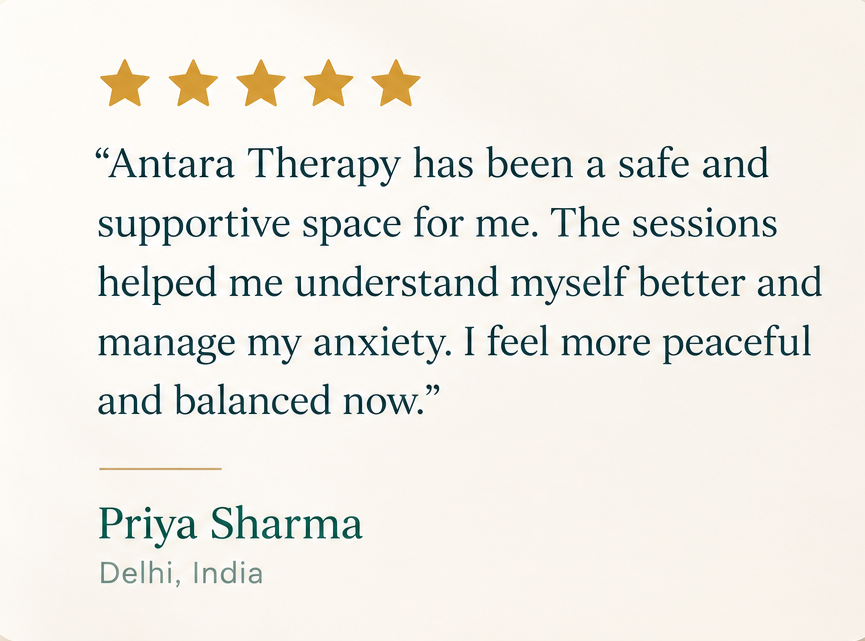
A reflection from someone who's been here
Shared with written consent and never containing clinical detail.
Questions
Things people usually want to know first
If yours isn't here, ask. There are no silly questions about therapy.
Still have questions? Contact usWhat happens during the first session?
Mostly talking and listening. You describe what brought you here, I ask questions to understand the shape of it, and we discuss what working together might look like. Nothing is diagnosed or decided on the spot.
How long is a session, and how often?
Sessions run [50/60] minutes. Weekly is common at the start; many people move to fortnightly or monthly as things settle. The rhythm is agreed between us, not fixed.
Is counselling confidential?
Yes. What you share is kept private, with the narrow exceptions professional ethics require — situations involving serious risk to you or someone else. Those limits are explained in the first session so nothing about them is a surprise.
Can I book for my child, or attend as a couple?
Both, yes. Choose Children, Teen, Couple or Family counselling when booking. For a child or teenager, a parent or guardian makes the booking and usually joins part of the first session.
Is therapy right for me?
You don't need a crisis to justify it. Feeling stuck, unclear or persistently low is reason enough. If it turns out a different kind of support would serve you better, I'll say so and help you find it.
What if I need to cancel or reschedule?
Let me know at least [NOTICE PERIOD] in advance and we'll move it at no cost. Full terms are in the cancellation policy.
Fees
Clear fees, stated upfront
All sessions are [50/60] minutes unless noted. Online and in-person are priced the same. Payment is taken at the time of booking.
Get in touch
Ask anything before you book
Questions about fees, formats, whether a particular service fits, or what a first session involves. Replies usually come within 12 to 24 hours.
- Phone
- +91-7307097501
- Practice location
- New Delhi
- Working hours
- 9 AM – 1 PM & 5 PM – 10 PM
Send a message
A brief description is enough. Please avoid sharing highly sensitive medical or personal details here.
By sending a message you agree to the privacy policy. This form is not monitored around the clock and is not for emergencies.